Flail Mower vs Rotary Mower: Which Cutting System Is Better for Rough Grass and Slopes?
A technical comparison of flail and rotary cutting systems for rough grass, slopes, weeds, contractor work and remote-controlled tracked mower applications.
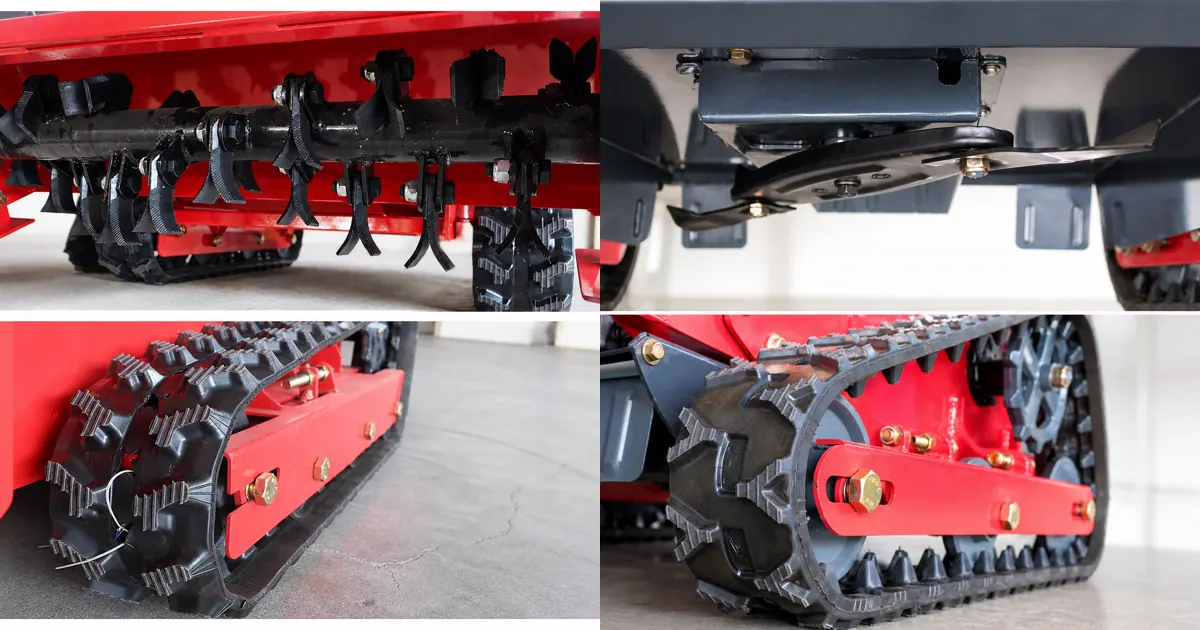
The cutting physics are different
A rotary mower uses a high-speed blade rotating in a horizontal plane. It is efficient for regular grass and can produce a clean finish when the ground is even and vegetation is predictable. A flail mower uses many smaller swinging tools mounted along a rotating shaft. These tools strike vegetation repeatedly and can move when they meet irregular material.
Impact behavior around stones and rough ground
Thrown object risk depends on machine design, shielding, speed, site inspection and operator discipline. However, flail tools are generally more forgiving when they strike irregular vegetation or minor debris because each tool can swing rather than acting like one large rigid blade.
| Factor | Flail mower | Rotary mower | Practical decision |
|---|---|---|---|
| Fine grass finish | Acceptable but not always lawn-grade | Often cleaner | Rotary fits finish mowing better |
| Rough grass | Strong | Variable | Flail fits rough maintenance better |
| Mixed weeds | Strong | Can struggle or leave uneven result | Flail is usually preferred |
| Unknown contractor sites | More tolerant | Requires more caution | Flail offers broader utility |
| Maintenance | Many small tools to inspect | Fewer larger blades | Different service model; downtime matters more than part count |
Why flail systems fit remote tracked machines
Remote-controlled tracked machines are often purchased for difficult ground. That ground is rarely clean turf. It may include tall grass, weeds, old stems, uneven soil, small stones, ruts and hidden material. A flail system matches this reality better because the cutting action is distributed across many tools.
Maintenance cost is about predictability
Some buyers assume fewer blades automatically means lower maintenance cost. That is incomplete. A professional buyer should ask how often parts are replaced, how easy they are to source, whether spare blades and belts are available and whether routine service can be completed without long delays.
- Check blade or flail tool availability before purchase.
- Confirm belt, filter and routine service parts support.
- Ask whether an on-site spare parts kit is included.
- Evaluate downtime cost, not only part price.
Which system should you buy?
You mainly maintain regular grass, want a cleaner turf finish and work on predictable ground.
You manage rough grass, weeds, slopes, contractor sites, orchards, roadside banks or solar farm vegetation.
You need both difficult-terrain mobility and a cutting system suited to irregular vegetation.
Flail mower vs rotary cutter vs topper: use the job, not the name
Search terms vary by country and industry. “Rotary mower”, “rotary cutter” and “topper” can describe overlapping equipment categories, while deck design, blade arrangement and guarding still differ. Compare the actual cutting mechanism and intended material instead of assuming that every product using the same label works the same way.
| Decision factor | Flail system | Rotary mower, cutter or topper |
|---|---|---|
| Primary job | Repeated impact cutting for rough grass, weeds and mixed growth | Fast horizontal cutting for regular grass or broader open-area topping, depending on deck design |
| Expected finish | Mulched, controlled rough-maintenance result | Often a cleaner or faster open-area cut on suitable vegetation |
| Unknown material | Individual swinging tools can be more tolerant of irregular vegetation | Large rotating blades require careful site inspection and a clear work zone |
| Maintenance pattern | More individual tools and mounting points to inspect | Fewer, larger blades but each blade and spindle condition remains critical |
| Best comparison evidence | Tool type, rotor, shielding, vegetation test and spare-tool availability | Blade layout, deck, shielding, finish requirement and replacement-blade availability |
Thrown-object boundary: neither system makes hidden debris safe. Inspect the work zone, use the required guarding and separation distance, and stop after any abnormal impact or vibration.
A five-minute cutting-system brief before requesting price
- Name the material: maintained grass, tall grass, weeds, old stems, light brush or mixed unknown growth.
- State the finish required: clean turf appearance, controlled rough cut or vegetation reduction.
- Show the ground: flat, sloped, rutted, rocky, wet or crossed by drains and obstacles.
- Estimate area, seasonal passes and the maximum daily operating window.
- Ask which blades or flail tools, belts, filters and service parts should be kept on site.
- Compare transport size, cleaning access, inspection time and downtime support as well as purchase price.
Use the broader tracked mower versus tracked flail mower buying guide to compare product families, or send vegetation photos for a cutting-system review.
Buyer FAQ
Is a flail mower better than a rotary mower for rough grass?
Yes, in most rough grass and mixed vegetation conditions, a flail mower is more suitable because its swinging tools handle irregular material better.
Does a rotary mower give a cleaner finish?
Usually yes. Rotary decks are often better for regular grass and finish mowing on smoother ground.
Which system is better for slopes?
For slopes with rough vegetation, a remote-controlled tracked flail mower is often the stronger choice because it combines track stability with a rough-cutting system.
Are flail mowers harder to maintain?
They have more individual cutting tools to inspect, but the real cost depends on spare parts availability, downtime and service access.
Continue Exploring GreenShine Guides
Compare mower types, review application scenarios, return to the main GreenShine site, or check current price and order options in the GreenShine store.