Best Remote-Controlled Mower for Orchards and Vineyards: What Buyers Should Check Before Ordering
A practical selection guide for orchard and vineyard buyers choosing a compact remote-controlled tracked mower for narrow lanes, uneven soil and routine vegetation control.
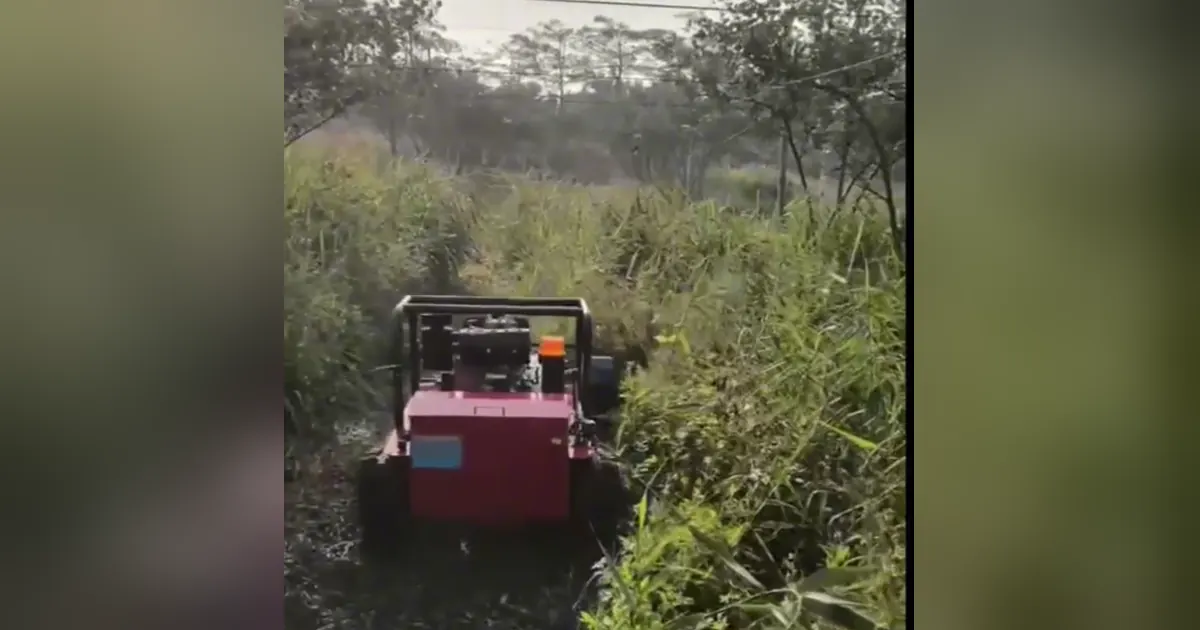
Orchards fail on access before they fail on power
Orchard and vineyard mowing is different from open-field mowing. The mower must pass between rows, turn without damaging trunks or trellis posts, work on uneven soil and manage grass under repeated seasonal cycles. A larger machine may look efficient on paper but lose time if it cannot enter lanes smoothly or requires constant repositioning.
Five measurements before ordering
- Row spacing: measure the narrowest practical lane, not the average lane.
- Gate and access width: include trailer ramps, storage entrances and service access.
- Turning space: check row ends, headlands and areas near fences.
- Ground condition: evaluate ruts, exposed roots, irrigation lines and wet soil.
- Vegetation type: distinguish regular grass from weeds, suckers and rough mixed growth.
Why compactness can beat raw output
In orchard work, productivity often comes from uninterrupted movement. A compact tracked mower can move through tighter access, turn with less disturbance and reduce repositioning time.
| Buyer condition | Preferred design priority | Reason |
|---|---|---|
| Narrow orchard lanes | Compact chassis | Prevents constant maneuvering and crop damage risk |
| Uneven soil and ruts | Tracked base | Improves contact and reduces sudden wheel drop |
| Mixed weeds and grass | Flail cutting system | Handles irregular growth more effectively |
| Frequent seasonal use | Easy service access | Routine maintenance must be fast and predictable |
Root and trunk protection
A mower moves inside a biological production system. Exposed roots, irrigation hoses, tree guards and trellis posts are part of the work environment. Remote control helps because the operator can slow down, adjust travel line and avoid forcing the machine through blind spots.
Choosing between compact and higher-output models
Prioritize access width, turning space and easy transport.
Balance chassis size, cutting width and flail capability.
Prioritize productivity, spare parts, repeatability and fast service.
Dealer questions before quoting
- What is the narrowest lane width?
- Are irrigation pipes, roots, stones or low branches present?
- How often is grass cut during the season?
- Is the customer maintaining grass only, or also weeds and rough growth?
- Will the machine be transported between sites?
Vineyard mower and orchard mower dimensions to send before a quote
A supplier needs the limiting dimensions, not only an average row width. Measure the narrowest point along the complete operating route and leave a working margin for steering, branches, posts and uneven ground. Do not treat machine width and cutting width as the same measurement.
| Measurement | How to capture it | Commercial reason |
|---|---|---|
| Gate and route clearance | Narrowest width and lowest overhead obstruction from unloading point to work area | Confirms that the machine can physically reach the site |
| Row spacing | Narrowest trunk-to-trunk or post-to-post distance, not the nominal planting plan | Sets the maximum practical machine envelope and steering margin |
| Headland turn | Usable length and width at row ends, including ditches, fences and irrigation hardware | Shows whether the operator can turn, reverse and align for the next row |
| Canopy and branch clearance | Lowest seasonal branch height and any hanging fruit or support wire | Protects the crop and prevents the upper machine structure from striking obstacles |
| Ground and roots | Exposed roots, berms, ruts, slope direction and wet sections | Guides cutting height, travel plan and the need for tracked traction |
| Vegetation profile | Grass and weed height, density, stem thickness and seasonal maximum | Separates finish mowing from orchard flail mower work |
Build a seasonal orchard and vineyard mowing brief
The lowest purchase price is not automatically the lowest annual cost. Record how the job changes through the growing season so the quotation can address the heaviest repeatable condition rather than one clean demonstration day.
- Total area and number of passes expected per season.
- Typical and worst-case vegetation before each pass.
- Maximum daily working window and transport time between plots.
- Manual trimming that will still be required around trunks, posts, irrigation and fence lines.
- Routine consumables and spare parts needed to protect uptime during the season.
- Photos or video of rows, headlands, slopes, roots and the unloading route.
Review the dedicated orchard and vineyard mowing application page, compare cutting principles in the flail mower versus rotary mower guide, or send the measurements for a quote-ready product discussion.
Buyer FAQ
What matters most when choosing an orchard mower?
Access width, turning space, root protection, ground clearance and serviceability matter more than maximum engine power alone.
Is a tracked mower useful in vineyards?
Yes, if the machine width matches the row spacing and the operator needs stable movement on uneven soil or slopes.
Should orchard buyers choose a flail mower?
A flail mower is a strong choice when the site has rough grass, weeds or mixed vegetation rather than only fine turf.
Can GS TAITAN-1000 be used for orchard work?
It can fit commercial orchard and wider-lane vegetation work, but buyers should confirm lane width, turning area and transport method before ordering.
Continue Exploring GreenShine Guides
Compare mower types, review application scenarios, return to the main GreenShine site, or check current price and order options in the GreenShine store.